Showing posts with label nutrition. Show all posts

Monday, October 25, 2010

Health Reform Law and your favorite lunch spot....


If you think the health care reform bill had nothing to do with your lunch, think again. A little noticed national calorie labeling rule tucked into the legislation assures that within a couple of years, everyone who walks into a chain restaurant will see calories counts displayed alongside the price of a meal.

The public health concept is twofold. Making restaurants post calorie counts might drive them to compete with healthier menu items instead of just on price and taste. And if customers learn that a Whopper is 670 calories and a caramel Frappucino is 380, they might make different choices.

New Yorkers have been living with highly visible calorie counts on chain restaurant menus for a couple of years. The results have been mixed at best.

Although the federal law is based largely on the one designed by the New York City Health Department, there are difference.
The rules about where the calories counts have to be at drive-through menus have been tightened. And the law only applies to chains with 20 restaurants or more. The New York law applies to chains with at least 15 restaurants. The change was requested by the National Restaurant Association, which wanted uniform standards nationwide.

Sixteen other states and localities have passed similar laws, and more are pending. The national law will supersede the local laws. So the Centers for Science in the Public Interest, which began a campaign for nutrition labeling at restaurants seven years ago, is suggesting people who worked for the fast food calorie labeling law turn their attention to getting calorie counts listed at cafeterias in hospitals and government buildings.

Reprinted from The New York Times, Kim Severson 3/23/10

Tuesday, February 23, 2010

Lunch


I'll just grab something fast!


How about an Arby's Ultimate BLT Market Fresh Sandwich. Sounds good, the "Market Fresh" is a nice touch. Let's see, how does *880 calories, *46 grams of fat (10 saturated) and *1740 mg of sodium sound for lunch?


How about Subway's Footlong Marina Meatball Sandwich? It shouldn't be a shock that it's bad, but how bad can it be? Hmmm, how does *1160 calories, *46 grams of fat (18 g saturated, 2 trans) and over *3000 mg of sodium sound? Yummy, even if you cut this one into a 6" your in trouble!


I have been good this week, I'll have a burger at Chili's. I'll take the Chili's Smokehouse Bacon Cheese Burger. I mean I know it's bad, but, I'll get back to the "diet" stuff tomorrow. So that's *1900 calories, *138 grams of fat (47 gr saturated) and 4200 mg of sodium.


Any one of these "lunches" and thousands of others just like them, just once a week, could wreck your efforts to lose weight and be healthy. Learn what you are eating, fix your own meals and stay away from the "cheat meals".

Monday, February 15, 2010

Eating Out


Got to grab a quick lunch out?


Ask for:

  • No Cheese


  • Grilled


  • No Mayo


  • Wheat Bread


  • No Oil


Stay away from:


  • Crispy (=fried)


  • Fried


  • Special Sauce (?)


  • "Creamy" Dressings


  • Cheese

  • Hotdogs


  • Processed Meat

Sunday, February 14, 2010

Supplements?

I am often asked what supplements do I take, or what do I recommend?

Supplements are a difficult subject to talk about. If you read any kind of "Muscle and Fiction" mag or spend anytime looking online you will find 1000s of supplements that promise the world and even have "studies" and "research" with graphs and pictures.


One thing is for certain: If there was a pill to make you lose fat, then every woman in America would be taking it or would have taken it. If there was a pill to build muscle (that was safe and legal), then every man in America would be taking it or would have tried it.

My first recommendation would be to check with your doctor before taking any supplements. Most doctors will recommend a daily multi-vitamin and maybe a few other items, but not much else. Medicine in the U.S. is proactive, it does not focus on prevention or nutrition. You might have a doctor that will say something like, "you should cut down on the fried foods" or something to that effect, but to really discus your diet and how it effects your health with your physician is rare. In other countries it's not like that. Medicine is more proactive, you can't deny that diet, nutrition and genetics is important, and it makes sense to look at it. It's like taking your car to a mechanic and not discussing the fact that you never change the oil or that you have used bad gas.


The Basics:

  • Multi-Vitamin-look for a "Men's" version if your male and "Woman's" if your not. I take One A Day Men's.

  • Joint Supplement-containing Glucosamine and Chondroitin. I have used several brands, always looking at the labels to make sure they contain high enough doses of the desired ingredients. I am currently taking a product called "Move Free Advanced Triple Strength". I have noticed a decrease in shoulder and knee pain since supplementing with this type of product.

  • Omega-3 Fish Oil- Look for enteric coated to prevent "fish burps". I take a capsule from Sam's that is enteric coated and double strength so only one per day is needed, just makes it easier. If you have certain risk factors for heart disease there is a prescription version of this supplement, ask your doctor. Lots of research out there about supplementing with fish oil, it's the vitamin of the new age.

Beyond Basic:

  • Antioxidants- I take ECGC a green tea extract, Grape Seed Extract and an occasional extra Vitamin C. I won't go into it here, but spend a few minutes researching some of these antioxidants and others and make your own choice. To me extra antioxidants make good sense.

  • BCAA-Branch Chain Amino Acids-During heavy training routines I take a BCAA supplement in a drink mix. There is a ton of research out there about how these aminos can help you rebuild after training. My real world results are mixed, but I have used them for years and can tell (real or not) when I don't have them.
  • Protein- A quality Whey Protein may be useful if you are on a calorie restrictive diet, or if you are trying to eat 5-6 meals a day, a low calorie smoothie with some whey is a easy fix. I am hit or miss when it comes to supplementing with protein, currently I'm taking a scoop (25grams) of whey with a diet juice drink in place of a regular snack. Don't take more than 30 grams in a single serving.
  • Extra Vitamin D3-The FDA has suggested doubling the RDA of Vit D. If you work nights or use sunscreen or don't get enough dark green leafy vegetables you may need an extra 400 IUs to 800 IUs of Vitamin D3. Research is showing it may effect your body in multiple ways including preventing cancer and benefiting heart health. It is a different class of supplement, unlike most other vitamins, it is a hormone. Make sure it is the "D3" version.


Monday, February 8, 2010

How Much Protien


Fact: Protein contains the same number of calories as carbs = 4

So eating protein results in eating calories, no way around it. If you are trying to take in more protein to help repair muscles after a hard workout then you must understand that you will likely be taking in more calories which will result in a BF increase.

New research from the University of Texas Medical Branch at Galveston is suggesting that the body can only use 30 grams of protein (a 4-ounce serving) per meal for muscle protein synthesis (production). Therefore, 4 ounces (approximately the size of a bar of soap, a checkbook, or a deck of cards) of chicken, fish, dairy, or lean beef may be all your body can use at one time. I am glad to see this information coming out. Some of the protein supplements containing 40-50+ grams per serving pack a lot of calories and may be going to waste.

Working out hard and following a basic meal schedule of 5-6 small meals per day seems to give you the most bang for your buck. Making sure you get 20-30 grams of protein in each one of those meals is important for your recovery. Keeping your meals around 300-400 calories is my basic recommendation, it's best to keep it simple.

Wednesday, August 12, 2009

New "Research" on exercise

The Myth about Exercise
is a

Misleading headline

If you get a chance to read this article in Time Magazine please do. I have a real problem with how this information has been presented on the news.

Basically the article states that when people exercise they become hungry and eat more. Furthermore, some people seem more likely to engage in bad eating habits because they exercise. "Well I ran this morning so I can eat these chips", would be a good example. So, it is not that exercise is a myth, but will power can become more of an issue for those who workout. So again it comes down to what you eat more than anything else.

I do agree, as stated in the article, that will power is like a muscle and it becomes tired the more we use it. So it may be better to cheat once in a while just be sure to make it in moderation and make wise choices when you do.

Saturday, January 3, 2009

Fat Intake

Look for 30% or less total calories from fat!


That means, taking the label above, divide the number of calories from fat {110} by the total number of calories {250} to get the % of fat calories.

110/250=.44 or 44%

Thursday, January 1, 2009

Sandwich is an easy FIX

A sandwich can be an easy fix, if you are looking for a "good for me" meal.

Just follow some common sense rules and you will be fine.

  • Make it yourself so you know what is in it
  • whole wheat bread
  • no secret sauces or mayo-use mustard it's low in calorie and fat free
  • Add spinach, sprouts, tomatoes, pickles and fancy lettuce for added vitamins
  • Avoid the cheese or try fat free or at least lower fat, just realize that you could be adding 150 calories to your sandwich with a single slice
  • Use lean meats like turkey, chicken or ham and watch for processed sandwich meats, look for natural striations in the meat if you don't see them it's likely that it is highly processed. The "turkey breast" may be pressed together from bits and pieces from who knows what. Terms like "all natural" and "low fat" have no true definition and are not regulated by the FDA.
  • Skip the chips or at least look for "baked", and again, you are adding 200-250 calories to your meal with no nutritional value.

Tuesday, October 14, 2008

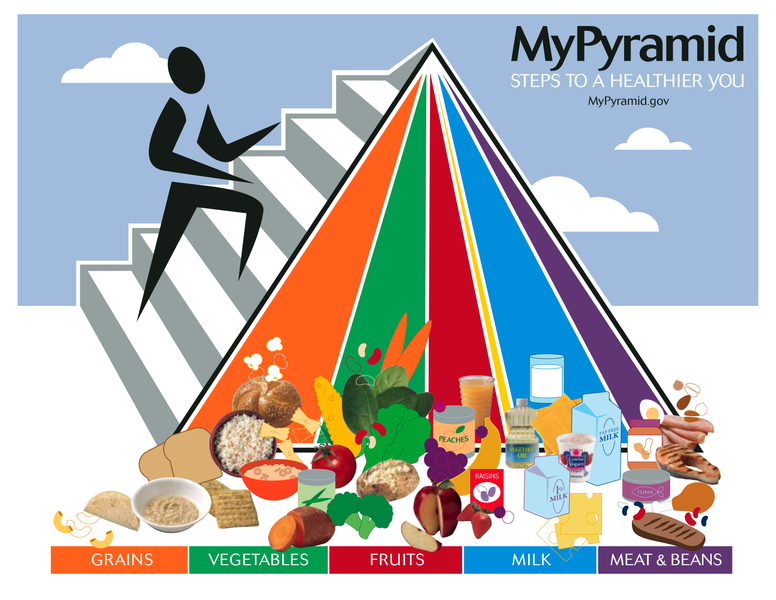
Get your pyramid on

Have no idea how to plan a diet or how many calories you need, visit http://www.mypyramid.gov/ and get a customized plan.
Another great site to visit is http://www.standupandeat.org/, tons of info from the Cooper Institute.

Monday, October 13, 2008

Protein, how much do I need?

Slaves to Advertisement

Everyone has done, for years I did it. Read magazines like Muscle and Fiction, Men's Health and worst of all Flex.
I see it all the time, guys taking massive amounts of protein to rebuild after a hard workout. "I Got to recover, I need to fuel those muscles." Right?
Well, no, it turns out not really. Carbs fuel your muscle and are most needed after a hard workout. Furthermore, protein is a minor and difficult source of energy for the body, another myth that advertisers push by selling "protein energy" supplements.
If you read Muscle and Fiction magazine then without doubt you have seen articles and adds trying to sell you on extra protein, 1 gram per pound of body weight, according to some "experts".

Sorry, but here are the FACTS.
  • A normal active adult only needs about .36 grams of protein per pound of body weight.

  • Truly active adults like athletes who are training vigorously on a daily basis may require .45-.75 grams of protein per pound of body weight.

  • Infants need 1 gram per pound of body weight.

So what does this mean? Protein has 4 calories per gram so if you only need 67 grams of protein per day ( 185lbs X .36= 67 grams) then the extra boils down to just extra calories. Extra calories are not what you are looking for if you are trying to loose weight. The facts are that you do not store "protein" you store fat. The protein that does not get used by your body is turned into glucose and fatty acids by the liver, stored as fat and some is excreted. So you can see if weight loss is your goal then extra protein is really extra calories that you must burn off later. This is hardest truth for the "hardcore" lifters to believe and for most of them it is not really an issue unless extra calories are a concern. I still struggle with it myself, I just finished a massive baked chicken breast for dinner that probably contained over 65 grams of protein, a part of me still wants to think it is justified.

Friday, August 29, 2008

Calories from FAT

The number one rule is, "READ LABELS"!


Your daily calories should come from a mixture of carbs, protein and fat. You need all of them to fuel your body properly. Out of those 3 basic groups FAT is an important one to watch.

Carbs and protein have 4 calories per gram and Fat has 9. Most agree, that fat calories should be limited to 30% of you total calorie intake or less if you are trying to lose weight.

So take the label above: Each serving has 250 calories, 110 of which come from fat. So 110/250=44%. So a quick look at this macaroni and cheese label indicates that it gets too many of its calories from fat and should be avoided. 25% of those fat calories are from saturated fat, NOT GOOD=NOT A GOOD SIDE DISH for your kids.

Wednesday, August 27, 2008

FAT: GOOD and BAD

Fat Facts: Fat contains 9 calories per gram and are a necessary dietary component. When looking at the fat content of food it is important to look at food ingredients, not just the nutritional facts, to determine what types of fats they may contain.
Bad Fats:
Saturated Fats-often solid at room temperature (beef, pork, whole milk) and they come from mostly animal sources.
Tropical oils-often are liquid at room temperture (palm oil, coconut oil) and are found in many different food items including baked pastries and snack foods.
Trans-fats (hydrogenated fats) have been shown to increase the risk of coronary heart disease. They are often found in fried fast foods, processed baked goods and stick margarines.
Current RDA states that individuals with a LDL/HDL of >130 mg/dl should get less than 7% of total daily calories from Saturated and Hydrogenated Fats.
Good Fats:
Monounsaturated fats and Polyunsaturated fats have been shown to have a positive effect on cholesterol levels in the body. Mono-fats tend to lower LDL (bad) cholesterol and increase HDL (good) cholesterol. Poly-fats tend to lower LDL, but also may lower HDL levels.
Omega-3 polyunsaturated fats (fish & flaxseed) have been proven to prevent heart attacks, strokes and sudden cardiac death. Omega-3s inhibit blood clot formation and promote dilation of blood vessels and prevent fatal cardiac arrhymias. They have been shown to have positive effects on body fat, skin and depression in some individuals. A fish oil supplement is worth looking into.

Tuesday, August 26, 2008

Cops and FASTFOOD


Ever wonder what your eating when you grab that burger and fries for that quick lunch?

How bad can it be? Is it ok to hit the drive through just a couple of times a week?

You might be surprised. Its not all bad, things are changing, most restaurants are making the nutritional value of their food available to the consumer. However, some food establishments have refused to list the nutritional information. You have to ask yourself why they would want to do that; don't you think you have a right to now what you are eating? Sure you do.

Quiznos has been a notorious example of this only recently listing the calories of a select few menu items, choosing not to show fat, sodium or other content.

Lets take a quick look at a couple of meals:
Meal #1: Whataburger, lg Fries, md shake
Whataburger, no cheese- 607 calories, 29.9g of fat, 1,158mg of sodium
Large Fries- 514 calories, 26g of fat, 413mg of sodium
32oz Vanilla Shake- 834 calories, 25g of fat, 449mg of sodium
This one meal as a total of 1955 calories, 80.9g of fat and 2020mg of sodium. Whata-Size it and add 275 calories and 15g of fat! It doesn't take a dietitian to realize that this is not going to be a good choice, but how many people eat something like that several times a week, what about everyday?
Meal #2: McDonald's Premium Grilled Chicken Sandwich, md coke
Sandwich calories-420, 17g fat, 1470mg sodium
Medium Coca Cola- 210 calories
This meal is a bit better, but still not the "diet meal" that some would like to think with 630 calories, 17g fat and 1470 sodium.
As you can see both of these meals are very high in sodium and would be very detrimental for anyone with high blood pressure or on a low sodium diet. As for the fat, the burger combo contains way too much fat with a large percentage coming from saturated fat. The addition of fries sends it over the edge.
The grilled chicken sandwich is better, it gets about 21% of its calories from fat, which is acceptable and it is low in saturated fat. You did know that a medium coke as over 200 calories of pure HIGH FRUCTROSE CORN SYRUP, right? If you must frequent "Fast Food" restaurants then take sometime to research the nutritional information for their menus. Don't just think that this is a problem at fast food restaurants, it is a common theme anywhere, even real sit down eateries.
http://www.whataburger.com/browse_nutritional_info.php http://www.mcdonalds.com/usa/eat/nutrition_info.html