Wednesday, November 5, 2008

High Intensity Interval Training-HIIT


HIIT consists of bouts of high-intensity activity followed by a slower pace of activity, referred to as a recovery period. Indoor cycling classes are an example. This type of training incorporates sprints and simulated hill climbs with slower-paced recovery periods.
I can’t confirm HIIT as a magic fat-burning technique, but it does beat the monotony and boredom that inevitably come with the typical 45 minutes of steady cardiovascular training. Some studies have shown that you burn more calories post-cardio and sustain an elevated metabolism longer after a HIIT session than you do after conventional cardio training.
A simple type of HIIT exercise is 30 seconds of intense activity mixed with 30 seconds of regular activity.
Here’s an example of a 20-minute jogging/running HIIT treadmill session (the same can be done on a bike, elliptical machine or stair-climbing machine). Beginners might want to replace the jogging portion with a brisk walk and the sprinting portion with jogging.
Warm up with a brisk, five-minute walk. Jog for 30 seconds, sprint for 30 seconds, then jog again for 30 seconds. Repeat this cycle. Cool down with a brisk, three-minute walk. When using a bike, elliptical machine or stair machine, alter the level during your sprint periods so they are challenging. If you are training at a track, try jogging around the curves and sprinting during the straightaways. Or, if you are jogging on a street, sprint from one telephone pole to another (or any type of marker), jogging between sprints.
If you are new to HIIT, start with a five-minute session and increase the length of the sessions by one minute on subsequent days. Follow a HIIT program for eight weeks to gauge its results. Strive for three to five HIIT sessions a week, alternating with weight-training days.
For those bent on using the HIIT method to lose weight, make sure you follow a clean diet. Instead of drastically reducing calories, try cutting your intake by 500 calories. This could be as simple as forgoing dessert, replacing your midday candy bar with a piece of fruit and a handful of almonds, or decreasing portion sizes.

Saturday, November 1, 2008

The Supplement Question?

What do I take?

The number one question beginners ask me is what type of supplements do I take or recommend. First, I hesitate to recommend any nutritional supplements. There are a lot of false advertisements out there and the lack of government regulation on product purity and label claims makes it a difficult subject. The Internet is a double edged sword when it comes to trying to research supplements. Some websites may appear to be legit but sometimes turn out to be advertisements in disguise or written by someone who just doesn't know. Magazines like Muscle and Fiction are worse. Think about it, how can you talk honestly about a bogus supplement when they are paying mega bucks to advertise on your back cover.......you can't.
Of course, ALWAYS CHECK WITH YOUR DOCTOR before taking supplements and make sure they don't interfere with any prescription medication. Do some research yourself!
With that said, here is what I take and why:


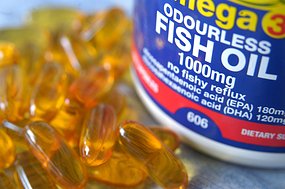
  • Omega 3 fish oil- Highly researched and commonly recommended by doctors. There is even a prescription version of this supplement and I would ask my doctor about it if you have cardiovascular disease or you are at risk. It has been shown to lower blood pressure, regulate and lower high LDL cholesterol, prevent cardiovascular disease and more than 30 other possible benefits more info here . Look for the coated caps to prevent "fish burps".
  • Multi-Vitamin-Most people don't get all the vitamins and minerals they need from their diets and a good multi is important and basic. If your a male look for multi for men same for women.
  • Extra Vitamin D3-Tons of new research coming out about Vitamin D. The RDA as already been doubled and children and adults older than 50 may require even more. I take an extra 800 iu a day of the D3 type. The benefits may extend far beyond its conection to calcuim including heart health.
  • Glucosamine/Chondroitin -In some trials it has been shown to be more effective in relieving knee pain, long term, then prescribed medication.
  • Antioxidants-I take extra antioxidants including 500 mg of Ester-C, Grapeseed Extract, and ECGC (the antioxidant found in green tea). I believe that they help me recover and fight some of the harsh effects that exercise and the environment can have on your body. This is something you should defiantly research on your own and talk to your doctor about.
  • Creatine and Branch Chain Amino Acids- After I workout I sometimes take these 2 products and again they are some of the most researched products out there. I would not recommend beginners use either one of these products, it is just not necessary. Once you have a base and are working out hard then give them a try. I can say that sometimes I see a bit of difference when I am on them, but I really can't claim much benefit from either.

Over the years I have spent a lot of money on various supplements with no real proof of any benefit. Save your money when it comes to miracle supplements, go to the gym, workout with intensity, eat right and get plenty of rest. We know that works.

Thursday, October 30, 2008

What is FITNESS


How do you define fitness?


The Cooper Institute defines fitness as...."an organic condition of the body which enables an individual to use his/her body in activities requiring strength , muscular endurance, cardiorespiratory fitness, flexibility, coordination, agility, power, balance, speed and accuracy - without undue experience of fatigue and exhaustion". Further it also includes ......"the ability to carry out daily tasks with vigor and alertness, without undue fatigue and with ample energy to engage in leisure time pursuits and to meet the above average physical stresses encountered in emergency situations".

How important is this in Law Enforcement? Your life or the life of your partner may depend on it.
GET FIT


The Core

These 3 basic moves can make a big difference in your core strength.

The Bicycle exercise is the best move to target the rectus abdominis (i.e., the 'six pack') and the obliques (the waist), according to a study done by the American Council on Exercise. To do this exercise correctly:
1. Lie face up on the floor and lace your fingers behind your head.

2. Bring the knees in towards the chest and lift the shoulder blades off the ground without pulling on the neck.

3. Straighten the left leg out while simultaneously turning the upper body to the right, bringing the left elbow towards the right knee.

4. Switch sides, bringing the right elbow towards the left knee.

5. Continue alternating sides in a 'pedaling' motion for 15-25 reps.

The plank exercise is a great way to build endurance in both the abs and back, as well as stabilizer muscles. To do it right:
1. Lie face down on mat resting on the forearms, palms flat on the floor.

2. Push off the floor, raising up onto toes and resting on the elbows.

3. Keep your back flat, in a straight line from head to heels.

4. Tilt your pelvis and contract your abdominals to prevent your rear end from sticking up in the air.

5. Hold for 20 to 60 seconds, lower and repeat for 3-5 reps.


The exercise ball is an excellent tool to strengthen the abs. To do it right:
1. Lie face-up with the ball resting under your mid/lower back.

2. Cross your arms over the chest or place them behind your head.

3. Contract your abs to lift your torso off the ball, pulling the bottom of your ribcage down toward your hips.

4. As you curl up, keep the ball stable (i.e., you shouldn't roll).

5. Lower back down, getting a stretch in the abs, and repeat for 12-16 reps.

Sunday, October 26, 2008

Run for your life

It's official:
Running increases your chances of living longer. Stanford researchers recently completed a 21-year study of 284 runners and 156 healthy nonrunners. They found that middle-aged and older runners cut their risk of disability and death from all major diseases by 40%. The scientists believe it's due to the sport's ability to increase cardiovascular fitness, improve aerobic capacity, expand organ reserve, boost skeletal and muscle mass, lower circulating inflammatory markers, and improve cognitive functions.

Sunday, October 19, 2008

"Body Mass Index", does it mean anything for me?

Body Mass Index
what is your
BMI
Most everyone has heard of the BMI scale and of it's "weaknesses" as depicted above. However, for most adults it can be a useful tool to determine obesity. Where it falls short is measuring subjects with large amounts of muscle mass or in some high fit individuals and athletes. BMI is used by doctors and the CDC to determine obesity and is widely accepted throughout the world. It is also useful in children and uses age along with height and weight to determine BMI.

The formula for adults aged 20 and over is:
You are looking for a score less than 25. If your score is 25-30 then you may be overweight and 30-39 obese and 40+ you are considered extremely obese. You may be considered underweight, as an adult with a BMI of 18 or less.


Check here for more useful information about BMI: Centers for Disease Control and Prevention


Saturday, October 18, 2008

What is the minimum?

In 2007 the American Heart Association and the American College of Sports Medicine released a joint statement on "Physical Activity and Public Health". The statement doubled the previous standards of moderate-intensity aerobic activity.


"To promote and maintain health, all healthy adults aged 18 to 65 years need moderate-intensity aerobic (endurance) physical activity for a minimum of 30 minutes on five days each week or vigorous-intensity aerobic physical activity for a minimum of 20 minutes of three days each week. Combinations of moderate and vigorous intensity activity can be performed to meet this recommendation. Moderate intensity aerobic activity is generally equivalent to a brisk walk and noticeably accelerates the heart rate. Vigorous intensity aerobic activity is exemplified by jogging, and causes rapid breathing and a substantial increase in heart rate."

It is important to understand that this is considered the "minimum" .

"...persons who wish to further improve their personal fitness, reduce their risk for chronic diseases and disabilities or prevent unhealthy weight gain may benefit by exceeding the minimum recommended amounts of physical activity."


Tuesday, October 14, 2008

Get your pyramid on

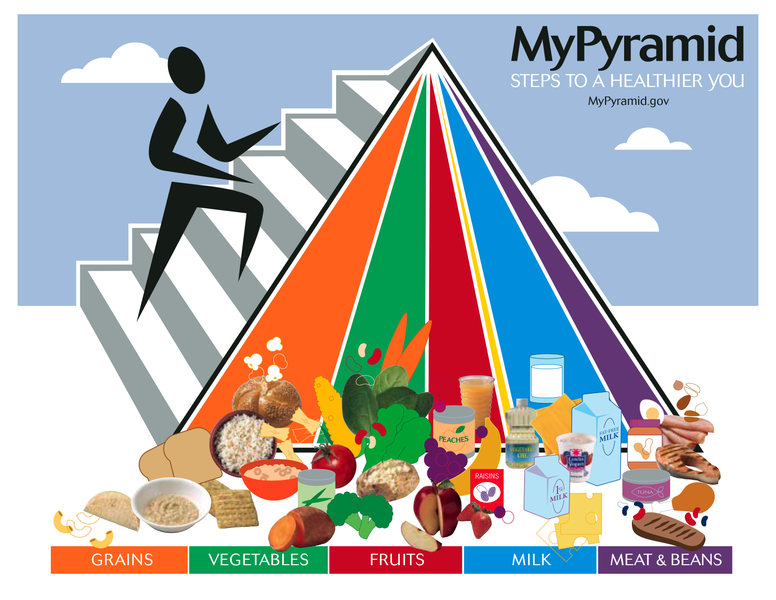
Have no idea how to plan a diet or how many calories you need, visit http://www.mypyramid.gov/ and get a customized plan.
Another great site to visit is http://www.standupandeat.org/, tons of info from the Cooper Institute.

Monday, October 13, 2008

Protein, how much do I need?

Slaves to Advertisement

Everyone has done, for years I did it. Read magazines like Muscle and Fiction, Men's Health and worst of all Flex.
I see it all the time, guys taking massive amounts of protein to rebuild after a hard workout. "I Got to recover, I need to fuel those muscles." Right?
Well, no, it turns out not really. Carbs fuel your muscle and are most needed after a hard workout. Furthermore, protein is a minor and difficult source of energy for the body, another myth that advertisers push by selling "protein energy" supplements.
If you read Muscle and Fiction magazine then without doubt you have seen articles and adds trying to sell you on extra protein, 1 gram per pound of body weight, according to some "experts".

Sorry, but here are the FACTS.
  • A normal active adult only needs about .36 grams of protein per pound of body weight.

  • Truly active adults like athletes who are training vigorously on a daily basis may require .45-.75 grams of protein per pound of body weight.

  • Infants need 1 gram per pound of body weight.

So what does this mean? Protein has 4 calories per gram so if you only need 67 grams of protein per day ( 185lbs X .36= 67 grams) then the extra boils down to just extra calories. Extra calories are not what you are looking for if you are trying to loose weight. The facts are that you do not store "protein" you store fat. The protein that does not get used by your body is turned into glucose and fatty acids by the liver, stored as fat and some is excreted. So you can see if weight loss is your goal then extra protein is really extra calories that you must burn off later. This is hardest truth for the "hardcore" lifters to believe and for most of them it is not really an issue unless extra calories are a concern. I still struggle with it myself, I just finished a massive baked chicken breast for dinner that probably contained over 65 grams of protein, a part of me still wants to think it is justified.

Thursday, October 9, 2008

How do I know if it is safe to start exercising?

That is an important question.
For some people, starting an exercise program is a daunting task, but it can also be dangerous. It is highly recommended that everyone get a physical exam, including blood work, and discuss starting an exercise program with your doctor. It is a good idea to know your cholesterol levels and your blood pressure before you get started.
Some risk to starting a program may include:
  • Individuals with a regular blood pressure reading of 140/90 or higher or taking antihypertensive medication.
  • Total cholesterol of 200 or higher, or LDL of 130 or higher, or a HDL of 40 or less.
  • Current Smoker
  • Family history of Heart Attack, Bypass Surgery or Sudden Death before age 55.
  • Obese with a BMI of 30 or higher.
  • Diabetes
  • Sedentary Lifestyle especially after age 45.

Highest Risk

Individuals with signs/symptoms of Cardiovascular Disease/Pulmonary Disease or known CVD, pulmonary or metabolic disease like diabetes. Subject taking Nitrates, Beta Blockers Calcium Channel Blockers, Alpha Blockers, Vasodilators, Antiarrhythmic Agent and Antihyperlipidemic Agents

Basically everyone needs a check-up once a year. The good news is once you get that done and are able to get started on a fitness program you can start reaping the benefits.

Wednesday, October 8, 2008

The Pull-up

The Pull-up Problem
Pull-ups are often required during fitness test and tryouts and they can be a tough challenge to overcome. The main reason for this is the pull-up uses several muscle groups that, if you don't work them out on a regular bases, are not normally developed to the degree needed to do pull-ups. Oh, then there is the body weight issue, if you are hauling extra pounds a pull-up will definitely let you know, so getting your body fat % down will help.


Some to the Muscles used:
Lats, Rhomboid, Posterior Delts and Biceps

That is just the main list, other major movers during the exercise include the Upper Trapezius, Teres Minor and Major and more. What is the best way to work these muscles? Pull-ups of course, what else. What if you can't do one pull-up? Then you have to start by mimicking the movement with other exercises. Doing pull-up with a partner helping you is the second best way to get all the muscles moving. Otherwise, you will have to concentrate on upper body exercises that require pulling. Lat Pulls and Rowing movements are necessary to develop the upper back. Biceps are used during those movements, but you will need to put some extra training time on them as well.

Monday, October 6, 2008

Target Heart Rate

When it comes to cardiovascular fitness it is important to exercise with in a certain intensity to make sure you get the benefit you are looking for and also so you don't over do it.
  • Just beginning: 50%-60% Intensity of Heart Rate Reserve for 10-30 minutes, 3 days a week.
  • Intermediate: 60%-70% Intensity of Heart Rate Reserve for 15-45 minutes, 3-4 days a week.
  • Advanced: 70%-85% Intensity of Heart Rate Reserve for 30-60 minutes, 5 days a week.

To know where you fall in these groups you need a physical fitness assessment from a certified personal trainer who can also recommend a productive cardio prescription. First step is to estimate your Maximal Heart Rate, follow the steps below (using my info as an example).

  1. Determine your resting heart rate. Ideally, count your pulse in the morning before you get out of bed for one minute. (example: 55 bpm)
  2. Determine your predicted maximal heart rate using 220-age. (example: 220-37=183)
  3. Subtract resting heart rate from predicted maximal heart rate to get your heart rate reserve. (example: 183-55=128)
  4. Multiply the heart rate reserve by the desired intensity level. (example:50%-60% intensity, 128 X 50%=64 bpm and 128 X 60%=77 bpm)
  5. Add the resting heart rate back to the results. This is the target heart range.(example 64+55=119 and 77+55=132, to exercise in the 50%-60% range my bpm should be between 119-132 bpm)

Saturday, October 4, 2008

Hear Rate Monitor


My Polar s725x.
If you are going to get serious about your carido vascular fitness then I would recommend a heart rate monitor. I have to say that I am a sucker for tech, most cops are, so if there is a toy out there that I can use I will. Heart rate monitors are great tools that allow you to exercise within certain parameters and get the most out of your workout. Like most tech, they can be basic and reasonably priced or very advanced and expensive. I would recommend the ones that use a chest strap you wear, it transmits data wirelessly to the watch that constantly monitors your heart rate. You can't go wrong with any model from Polar. Others style include models that you have to place two fingers on and wait for the watch to give a current HR reading. These models usually don't work as well and are not as carefree as the chest strap models.
A couple of years ago I purchase the Polar s725x shown above. I is a more advanced model that can be coupled with wireless bike sensor to give you speed, distance and time while you are on your bike, or a wireless foot pod that can give you a speed, distance, pace and other info while you run. The watch comes with software that allows you to download the information to your PC to track you workouts, calories burned and more.

Sample of Polar software that allows you to analyze your workouts with great detail.

Tuesday, September 30, 2008

Cardiovascular Disease CVD

CVD
CVD is a general term for diseases that affect the heart and or circulatory system, and is the leading cause of death in the U.S. for both men and women, approximately 1 million deaths annually.
Coronary Artery Disease CAD is a common form of CVD. CAD is the buildup of fatty plaque in the coronary arteries, which are located within the heart muscle. This buildup can cause a restriction of blood flow to the heart and if a blockage occurs a heart attack results. Approximately 1.1 million heart attacks occur annually in the United States, with over 90% of these occurring at rest. Heart attacks account for 52% of all CVD deaths.
It is important to be able to recognize the "7 Major (primary) risk Factors for CAD", most importantly it is important to realize that, all but one of these risk factors are completely avoidable for most individuals.
7 Major Risk Factors for CAD
1) Abnormal Blood Cholesterol Level
2) Hypertension
3) Smoking
4) Diabetes/Prediabetes
5) Family History
6) Sedentary Lifestyle
7) Obesity
It is important to get a yearly checkup complete with blood work. Check with your doctor about these risk factors and make a change. It could save your life.
-some information taken from the Cooper Institute manual '08

Sunday, September 28, 2008

Cooper Institute Law Enforcement Fitness Program

Cooper Institute gym

This is my first attempt at a mobile entry on the blog. I will send some pictures through out the week while I'm here getting my certification.

Sent from my BlackBerry® smartphone with SprintSpeed

Friday, September 26, 2008

10 Muscle Facts

DID YOU KNOW

1.The human body has more than 650 muscles.

2.Skeletal muscle is the body's largest tissue, accounting for approximately 45% of body weight in men and 36% in women.

3.Muscle fibers are thinner than a human hair and can support up 1,000 times its own weight.

4.There are three types of muscles in the human body: skeletal, smooth and cardiac.

5.Muscles are efficient. They normally use about 35-50 percent of their potential energy.

6.By the age of 65, individuals who haven't engaged in strength/exercise programs on a regular basis may incur a decrease in muscular strength by as much as 80%.

7.Approximately 70-75% of skeletal muscle is water, 20-25% is protein.

8.Muscle soreness is a result of microscopic trauma of tissue and not due to lactic acid.

9.By the age of 80, sedentary individuals will lose about 50% of their muscle mass.

10.People who strength train with a partner have more success and better results.


I'm going to have to buy on of these!


Another effective use for this new toy I mean tool. I have looked at them online and surpised to find out they are pricey at $99-$129.


Crunch


The basic crunch is performed by lying with your back on the ball, and your feet flat on the ground. Then proceed to complete a crunching motion, and return to the initial position. The ball will allow you to get a greater range of motion for your abdominals. Complete at least 3 set of 30 crunches, or as many as you can do.

Thursday, September 25, 2008

Great Pushup, Crazy Contraption

BOSU BALL

Found an awesome pushup using a contraption that has been around for awhile, but I have always walked by it. I knew it had potential, I just wasn't sure how to give it a chance.
This exercise is performed with the bubble side on the ground. Place your hands on the outer edges of the flat platform, making sure they are directly under your shoulders. Making sure to maintain a flat back, tighten your abdominals throughout the workout.
Descend until your chest is very close to the platform, and then slowly push back up. Perform one set until you cannot go any more, making sure to keep proper form the entire time. Once you complete your first set, rest for one minute, and repeat.

Monday, September 22, 2008

Core Strength

BenchPress and Squats, Bicep curls and Skull Crushers are all important exercises, but, alone they can't prepare you for hours of groucho walking, climbing, running, stopping, waiting and jumping all with a full load out of gear. You core must be able to support your body and allow it to move and balance with ease.
This takes more than a few situps and crunches. Try adding these a couple of times a week.
The side bridge: hold for up to 2 minutes Swiss ball twist
Hanging weighted twist:
You will be surprised what a situp can't do.


Wednesday, September 3, 2008

Know the Ozone Levels!

Breathe Easy be aware of ozone and air pollution when exercising outdoors.
Just because you're not in a big city does not mean you're safe; pollutants can be carried into rural areas. Slow your pace or move indoors if you experience tightness in your chest, wheezing, coughing or unusual difficulty breathing. Additional pointers: Protect lungs with vitamins and antioxidants from a diet rich in fruits and vegetables. Avoid outdoor exercise when the weather is thick and stagnant. If you exercise midday when ozone levels peak, take it indoors. Avoid busy streets and rush hour to limit exposure to pollution.
To check local ozone levels click this link: Check it Here!

Monday, September 1, 2008

Exercise of the day

If you are looking for a change, try incline bicep curls. You will find that you must use a lighter wieght and they will cook your biceps fast.